
Follow Us


1550 Wewatta St Suite 200.

Denver, CO 80202


Email: info@goddit.io


Tel: 720-725-0997


Software Case Study: Saving MarTech Startup Bruno.ai

Marcin Ziolkowski • Aug 16, 2022

This is a story about Gustav and Hugo, co-founders of a MarTech startup called Bruno.ai, who were recently interviewed by Marcin Ziolkowski, CEO of Goddit. 


Background Story: These founders have been in the marketing and SEO business for several years. In 2020 they had an idea that they wanted to build the easiest and simplest Ranktracker, a business software.


Marcin: Can you explain who or what a Ranktracker is?

Gustav: Sure. Let’s say I want my eCommerce site selling shoes to rank higher in search engine results for the phrases ‘sneakers’ or ‘football cleats.’ Ranktracker is software that constantly checks how good your website ranks for specific keywords and informs you daily if you gain or lose a position.


Marcin: Have you ever built a software product before?

Gustav: No, never. This was our first time. Our customers love our services, and we thought we have deep enough expertise within the industry to create something unique in the marketing software scene. We thought - how hard can it be to build software since we’ve learnt so much, right?


Marcin:
How did you approach this challenge?

Gustav: We reached out to an offshore software agency with an idea. We had a couple of meetings. We felt we connected with the team on a personal level. We presented the idea. We received a fixed quote for the whole project. It looked really good. I thought that if we could build this tool on this budget, it’s going to be a space rocket.


Marcin
: How did you evaluate the talent of your software team?

Gustav: They said they could do it, and we believed them. That’s it.

Hugo: We thought we could make software excellent and cheap. It’s a trap.

Gustav:   Yes, we were very naive.


Marcin:
  How did the project go?

Hugo: Initially, it went pretty well. The team was delivering constant updates. Problems started to occur when the team blew their original deadline, which was estimated to take three calendar months.

Gustav: We started to suspect that it would end badly after they blew their 3rd deadline.


Sour grapefruits

More to the Story: Their software project has been in limbo for over a year. The team was making updates every 2-3 weeks. With every bug they fixed, the developers broke two or three other things that worked in the previous version by accident. 


And things got worse; a new engineer worked on their project monthly. This type of turnover can be typical of software companies that constantly switch team members due to high turnover. These developments prompted Hugo to reach out to Marcin for advice.


Hugo: After this experience, my trust in software developers hit rock bottom. I thought we would need seasoned and experienced software professionals to inspect the quality of what was done and set a path forward to make Bruno.ai work.


Marcin:
The developer's original code was not completely bad. Some parts needed reworking due to performance issues. One of the root causes of failure was poor communication and a lack of understanding of the company's business needs. The vendor didn’t ask basic questions like: ‘how many users does the system need to support to break even every month? 


Gustav:
The Goddit Team agreed to help us, and we set a new product development strategy. We found new developers who were thoroughly interviewed and hand-picked by Goddit’s founder.


Hugo:
We were more than pleased. After two weeks of working with a new software team, the product was live!

Marcin: What is your situation now?

Gustav: We feel we are very much in control of what is happening. Our needs are translated into the software language we didn’t know how to speak. Goddit handles communication between Product Managers and software developers.


You guys have very high standards and work ethics. I manage people daily. I sleep safe, knowing that the product being developed is under the same scrutiny I have towards my marketing team.


Hugo:
We see that the developers are devoted to the project. There is no turnover, and communication is excellent. So far, we have delivered everything we wanted.


Gustav:
I am blind as a business owner, I can be easily fooled. You guys are my flashlight.


If I were to do it all over, I would first secure a CTO type of competences to evaluate the software team. You shouldn’t be afraid to add this extra cost in the early building phase of your software product. 


Hugo:
Finally, I also should say that the whole company has learned a lot about software development. Eventually, we will have in-house software competencies, but what has been done so far is not lost. Our Product Manager has learned a lot from you about how to do this right.
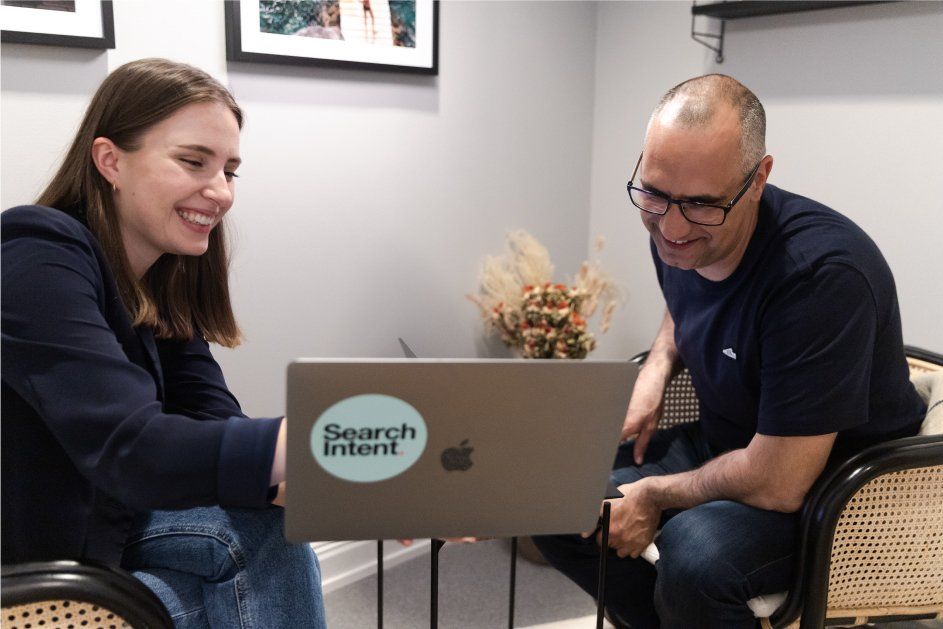

Happy people looking at the laptop
 Marcin Ziolkowski  writes about business software development strategies for early-stage companies. He also founded Goddit LLC.  Based in Denver, Colorado, Goddit is a burst tech dev, full-stack software development team providing systems integrations and public cloud AWS and Azure solutions architecture.

Gourmet food serving
By Marcin Ziolkowski 01 Nov, 2022
With Twitter layoffs can smaller tech companies like yours pluck one of those super-intelligent software engineers from the big tech companies? You smell opportunity in quickly changing conditions.
By Marcin Ziolkowski 19 Oct, 2022
Your great startup CTO gave their notice today, and you're wondering what to do next. It stings because you suddenly hear that they are no longer interested in the company and want to pursue new challenges. What happened? Your business was booming, so why is your chief engineer no longer interested in working on your projects? Depending on what stage of growth your business is in, this could be a terrible thing or a good opportunity to make a better choice. I will give you new insights into the technology personality types so that your next hire in this area is a better fit. Hiring a new Chief Technology Officer is a big deal because if you hire one with competencies that do not match the stage your business needs most now, you have bought real trouble for your company. Let's keep you out of trouble and help you hire a CTO that gets your tech stack to the next power stage. I have more than a bit of experience in this area of connecting the right people to get tech projects out the door, under budget, and fast to market. I also have scars that came from my experiences in building dozens of systems, hundreds of system integrations, and several mobile apps. It is challenging to make daily decisions about how to create the right product vs. how to build the product right.
By Marcin Ziolkowski 04 Oct, 2022
The future is here with exciting new low-code and no-code software development platforms that save companies time and money. Ok, this may not be exciting to you from a development standpoint, as it is for me, but I know everyone loves to save a boatload of money when they can. I will crawl into the details of where we are seeing and using low-code and no-code tools for client software projects, and if you are a founder or CTO, how you can take your project to market faster. Low-Code and No-Code tools have been around for a while. Content Management Systems- (CMS) have been present for about 20 years . They have evolved thanks to solutions like Wix , which incorporated all the functionalities of a website: Used for quick content changes and blog posting. Creation of SSL certificates (encrypted secure web connections). Setting up analytics and tag management scripts for tracking. Updating DNS entries (a human-friendly name to a DNS server) and changing name servers.
Eggs in a carton
By Marcin Ziolkowski 20 Sep, 2022
Most startups and scaling businesses do not know that software code can get stale and moldy, expiring like a loaf of bread. And when you are taking the most critical steps to prove the viability of your MVP and build it as fast as possible, it can derail your path to market. You likely have used 20% of your effective software lifespan already. If you are one of the founders happily developing your MVP for six or… sometimes even 12 months – think again. How many customers did you sign up for your product at that time? Most likely, you have used 20% of your effective software lifespan. Software code has an average effective lifespan of 5 years. That's right, as a rule of thumb, based on my experience, software code has an average effective lifespan of 5 years. At the five-year mark, your competitors can reproduce 100% of the product you have already built. They can do more with your product than you could use five times the technology power at a fraction of the cost. After five years, if you cannot capture the market share you had intended, your competition will have surpassed you because of technology. For example, AWS has been consistently lowering the prices of its computing platform. GO, and Rust is becoming more popular within their space.
By Marcin Ziolkowski 06 Sep, 2022
If you are currently working with a software development team or are in the process of choosing one, then there are seven tips here that will help you avoid trouble. I want to save you from unnecessary pain with project advice born out of direct experience managing and executing software projects for all types of companies. Let’s demystify software development projects right here and now and help you identify the seven tells. What is a tell? If you play the card game of poker, you know that other players can give you “tells” about their hand strength and confidence based on tiny ways they behave. It is true in your business with development software projects. Some are subtle, but I know what to look for. Tell #1 – Development team needs more time. You believe you are getting the exact thing you ordered initially, and suddenly the development team says they need additional time. What’s weird about this is that nothing has changed from your business side or what you told them you wanted. Most likely, the developer changed what they needed, which delayed the project because they did not ask you enough questions about your business at the beginning. It is a big red flag if your software design/development team is not crawling deep into your business with frequent questions. It happens more than it should.
Business Software Startup Advice
By Marcin Ziolkowski 23 Aug, 2022
.. you could be looking at a do-over.
Boules in a ring
By Marcin Ziolkowski 25 Jul, 2022
Background Story : Niklas Lundgren is the Chief Technology Officer of Boulebar , a French-originating boutique chain of restaurants that also happens to be a 21st-century cutting-edge cloud-first company. Their Company needed help with optimizing its cloud computing costs and recently met for a chat with Marcin Ziolkowski, CEO of Goddit.io. Marcin: Thanks for taking the time to talk more about what is happening at Boulebar, you guys are fast-moving, and it is fun to see what you are currently working on. Marcin: You’re using the public cloud, right? Niklas: That is correct. We have been one of the early adopters of cloud computing and moved all our core reservation and invoicing systems to Microsoft Azure long ago. We experienced considerable efficiency gains. We have 80 employees in the low season and up to 200 in the summer. I am the only technical person within the organization. I manage it from a software perspective with the help of a handful of consultants. Marcin: Your software has been running on Azure for years. Why did you reach out to us? Niklas: The problem was the cost. Initially, the public cloud cost seemed low, but as the company grew and services expanded, Azure kept rising prices for its services. The charges have recently been increased to unsustainable levels. When we started the cost optimization project, we had an annual rate of $50 000 per year for their service.
Share by: